
 Share on Facebook
 Share on Instagram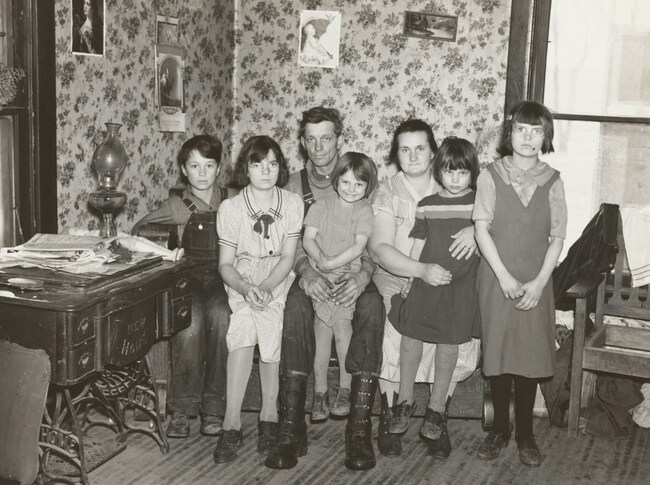
 1667
1667Why a historical view of adoption?
The moment of adoption is a sharp turning point in a child’s life, one that holds the immense power of literally changing their fate. It is an open door into the unknown that the adoptee has to pass through, oftentimes while they are too young to even wonder what could be waiting on the other side. Today, we expect that door to be adorned with flowers and to hold love, hope, care and the promise of family. We expect it to be the door that leads not just to a new home, but to their one true childhood home. However, that hasn’t always been the case. For too many children in US history, it was the gate to a different experience altogether, where they had to work hard and endure adversity to earn their keep. Or it could have represented the barred entry to an impenetrable fortress that they were never deemed good enough to enter.
Adoptees who are searching for their birth relatives are eagerly searching for answers about where they came from, why they were given up, and what their world might have looked like with their biological family in it. They are on a life-changing, incredibly courageous journey which can - for better or worse - often lead to truth and clarity. In this article we explore how adoption itself has been on a transformative journey of its own, and how it emanated from the very core of US culture and society. At every step of the way holding up a mirror to its collective architects.
Adoption was molded by the individual beliefs of every birth and adoptive parent, and by the collective views and rigors of society as a whole. It has at time been contorted into distorted shapes by hard times, only to be then painstakingly carved with the filigrees of heartfelt nurture by kinder days of peace and plenty. And with each new layer, it has told a tale of the incredible capacity of human culture to find its way towards authentic connection, truth and justice. A historical view of adoption speaks to who the American people used to be as a society, what made them turn course, and how far their changes of mind and heart have helped them come over time.
Adoption as an informal practice
When we think of childhood, we envision this sacred time of wonder where a child takes their first steps into a world meant to guide, embrace and protect them. However, it was only in the second half of the 17th century that childhood first started to be regarded as a different stage of life, separate from adulthood. Before the works of philosophers such as Jean-Jacques Rousseau, John Locke or St Augustine, little scientific thought was devoted to the ways a child’s upbringing and life experiences shape them into the people they grow up to be.
A family’s offspring were regarded as valuable helping hands for working the land, helping with tasks or tending the household. However they were also mouths to feed, and this could be challenging for impoverished families in difficult times. Being orphaned, unwanted, or destitute was often a terrible state.
In colonial times, the closest thing to adoption was a type of economically-oriented foster placement. Young children who were orphaned or from poverty-stricken households were placed with wealthier families, whom they would help with chores, farm labour or trades. Oftentimes, they were indentured by contract to work or apprentice with those who took them in, in exchange for food, clothing and a roof over their heads. This does not necessarily exclude family-like bonds from developing in some cases, but in many others, the children were little more than indentured servants until they became of age and could fend for themselves.
There were, of course, also cases of kind, often childless individuals or families who took in an orphaned, illegitimate or deprived child and raised them as their own. But these situations were usually not formally documented unless matters such as nobiliary titles or significant inheritance were at stake. For example, the first recorded case of formal adoption in the American colonies was that of Spencer Phips (born Bennett). Spencer was adopted in 1693 by his childless uncle, Massachusetts Governor Sir William Phips, to take his name, inherit his estate and further his legacy. However, there were no adoption laws at this time, so the adoption process was merely a legal statement made by the adoptive father.
The first adoption laws
Not surprisingly, Massachusetts was also the first state to pass the first adoption legislation in the USA. In 1851, the Act to Provide for the Adoption of Children in Massachusetts defined this process and laid the groundwork for setting clear principles by which it would function. It was the first legal document to state that adoptions needed to serve the adoptees’ best interests and that a judge would have to determine the suitability of potential adoptive families according to clear criteria (e.g. ability to provide necessities and an education). The biological parents’ consent was also required - for the first time in history - to finalise this process. This is an important addition, because in the earlier days, children could be simply removed by the state from families deemed unfit to raise them without question or ways to legally appeal this decision.
Moreover, this initial piece of legislation broke away from viewing adoptees as labour resources and encouraged adoptive parents to view them as part of their family, as they would a child of their own flesh and blood. Parenthood was thus no longer defined in terms of biological kinship alone. Similar laws were passed in 24 more states over the following 25 years, and eventually, each of the United States had a formal adoption law.
The infamous Orphan Trains
While adoption laws were still in their infancy, with only 2 states (Massachusetts and Pennsylvania) having passed such acts, Reverend Charles Loring Brace founded the New York Children’s Aid Society (1853). He claimed his mission was to rescue destitute children from families that could not or would not care for them and give them good, Christian lives. However, the methods he chose to do so were highly controversial.
Brace rounded up orphans and impoverished children from families he deemed disruptive to the social order and boarded them up in so-called “Orphan trains”, bound for rural Pennsylvania. The trains stopped in stations, unloaded the children and put them up on a platform, inviting passers-by to simply come up and take home the one they liked best. The children were given away like cattle, with no interviews or background checks for the adoptive parents and no monitoring of their situation thereafter. This experience was profoundly traumatising and humiliating, as historians recount:
This practice of standing children on platforms to be selected by prospective adoptive parents seems to have originated the term “to be put up for adoption”. However, there were no legal documents signed by the adoptive families, and birth parents did not even need to be notified, let alone consent to having their children given away. The practice of Orphan Trains spread widely not only in the USA, but also in Australia and Great Britain. It is estimated that between 100,000 and 250,000 children were adopted this way.
The Roosevelt era adoption reforms
As President Theodore Roosevelt came into office, new awareness arose regarding the adoption process in the U.S. That is partly because Roosevelt had been raised in an orphanage himself and was thus particularly sympathetic to this cause. In 1909, the White House Conference on the Care of Dependent Children took place at the request of the National Child-Rescue League. It was during this event that the sanctity of the bond between biological parents and their children was recognised, and policy started shifting towards helping children remain with their birth families despite economic hardship. Single mothers or struggling families would be assisted to become able to provide for their children, rather than have them removed and institutionalised as a primary measure.
These new, stricter criteria for removing children from their homes led to the practice of thorough evaluations of both birth families and prospective adoptive families, to ensure that the child is well provided for and their interest is best served. However, they also had the unforeseen effect of now stigmatising adoptions as unnatural and families who partook in them as immoral. Social workers had to work hard to combat these harmful stereotypes among the general public.
Adoption discrimination as an institutionalised practice
The stigma that arose around adoptions resulted in harmful prejudice among both public officials and the public. A belief emerged that unwed mothers suffered from character flaws and were “feeble-minded”, and that they would pass that on genetically to the children they gave up for adoption. Poverty was also associated with moral failure rather than systemic inequity; thus, adoptees were often regarded as having poor genes. This led to a decrease in adoptions, as people feared they would welcome a genetically
“defective” and thus physically and morally flawed child into their family. Here is how historian Wayne E. Carp describes this phenomenon:
In response, since the IQ test was growing in popularity around this time (mid-1910s), evaluations to verify the mental potential of adoptees started to be performed. Of course, the outcomes of these tests did not reflect a child’s true value or potential, but they did increase discrimination against “feeble-minded” adoptees.
Paradoxically, while the practice of adoption was mostly kept discreet due to social prejudice, “baby farms” started to blossom. Since this practice was not yet illegal, they sold “high-quality” adoptive babies to childless couples for profit. These transactions were often kept secret, as the adoptee would be presented as the family’s biological child. This practice was gradually prohibited over time, but it took decades and several pieces of legislation to outlaw it in most of its forms. By the 1950s-1960s, most states had made it illegal to give or receive payment for surrendering a child for adoption.
World War II Adoptions and the “Baby Scoop” era
In the years surrounding the Second World War, the US saw a boom in legal adoptions. A multitude of factors, such as an unusually high number of illegitimate births, a cultural shift that made rearing children a patriotic duty, as well as the post-war increase in marriages and the timelier diagnosis of couple infertility, all contributed to this phenomenon. The number of adoptions tripled between 1937 and 1945, then doubled once more by 1955.
For the first time, poverty was no longer the main driver of surrendering children for adoption, as it was replaced by illegitimacy. It is estimated that 4 million babies born out of wedlock were placed for adoption between 1940 and 1970.Being an unwed mother was considered scandalous at the time and could significantly impact a young woman’s chances of marrying or starting a career. Moreover, during the war, many babies were born out of wedlock to married women whose husbands had been drafted or to widows, who chose to surrender them to avoid public shunning.
Giving illegitimate children up for adoption was often presented to women (especially to teenage mothers) as their only available option. This is why the period between the end of the war and the mid 1970s is referred to by adoption historians as the Baby Scoop. Historian Solinger remarks on this harsh reality of the time:
Fortunately, the demand to adopt children, especially babies, also soared during this time, especially after the war ended. A great number of couples were wed in the prosperous era that followed and some of them struggled with fertility. Having no children was socially frowned upon in that conservative time, even if it was the result of a medical condition. So discreetly adopting children that physically resembled the prospective parents as close as possible became a convenient solution to this problem and helped many Americans start a traditional family.
The rise of specialised adoption agencies
This sudden surge in adoptions and the growing preference for certain types of children led to the development of specialised services ready to intermediate this process. Thus, around this time, specialised adoption agencies saw a massive rise in popularity. Some such institutions had first emerged decades earlier (1910-1930), mostly in New York. However, during World War II, their role in the adoption process became much more important and they became far more widely employed as intermediaries between biological and adoptive families.
While at the start of the century, families preferred to take in older children, who could help out with work, this trend shifted dramatically during and after the war. By the 1950s, 70% of adoptees were babies under the age of 1, who could be easily integrated into families and presented as their biological children. They were carefully selected by agency social workers to match their adopted parents’ physical traits, their ethnicity, race and even their religious background.
However, the large number of prospective adoptive families looking to adopt babies also led to closer scrutiny of these couples and allowed social workers to be selective in choosing the right parents for each child. This led to a significant increase in adoption agency prestige, as their employees came to be regarded as experts in familial matching. Thus, by the 1970s, 80% of US adoptions were carried out via these specialised agencies.
The “ideal” adoptive families the agency social workers selected often followed a very similar pattern: white, affluent, traditional married couples in their 30s, who were active in their church and psychologically well-adjusted. The wife would need to agree to be a stay-at-home mother and devote her time and energy to rearing the child.
The first transracial, interethnic and international adoptions
Before the half of the 20th century, adopting a child of a different race or ethnicity was legally unheard of. It wasn’t until 1948 that the USA recorded the first African-American child adoption by a white couple, in Minnesota. Up until that, the general view was that children should only be placed with families that “matched” their ethnic and cultural background. This created fewer opportunities for children of colour to be adopted, as there were overall fewer families of colour looking to adopt and being considered eligible.
Moreover, the large number of foreign orphans left in the wake of the Great War opened the door to the first international adoptions. American families opened their homes and their hearts to children from Germany, Greece or Japan, as part of a humanitarian sentiment. This trend continued after the Korean War, leading to a growing number of interethnic American families. However, it wasn’t until the 2000 Child Citizenship Act that internationally adopted children automatically received US citizenship upon entry into the United States.
Once the taboo regarding the adoption of children who were visibly of a different genetic background than their adoptive parents was removed, this practice became increasingly popular. It also contributed to eroding the need for secrecy around adoptions and may have contributed to the growing public pressure for opening up adoptions that took place in the ‘70s.
The progressive era of adoptee rights
As the process of adoption started to become normalised and secrecy and stigma around it were dispelled, more and more adult adoptees demanded the right to access their adoption records in the US. A growing movement emerged in the 1970s and 1980s, requesting open adoptions. This was supported by research, which showed this practice to be beneficial to the adopted child’s best interest and harmonious social and psychological development. Thus, the foundation was laid down for modern adoption rights.
In the 1970s, as children adopted during the post-war boom were coming of age, the first associations supporting the rights of adult adoptees came into being. Founded in 1971, the Adoptees' Liberty Movement Association militated for open adoptions and pioneered the efforts for reuniting adoptees with their birth families.
Despite these efforts, adoptions remained closed or semi-open (contact between the adopted and biological family was intermediated by the adoption agency). In the late 1990s, another adult adoptees’ rights organization, Bastard Nation, advocated strongly for one’s right to access their birth documents, resulting in success. Oregon was the first state to rule against permanently sealed adoption records: in 1998, its legislature passed Ballot Measure 58, which allowed adoptees to legally request and access their original birth certificate.
One by one, other US states followed suit. However, presently, only 14 states offer adoptees unrestricted access to their birth certificates upon formal request. Others only offer restricted access, requiring a court order or the birth parents’ consent to disclose this information. Moreover, excessive bureaucracy and - in some places - substantial fees for accessing adoption records can deter adoptees from exercising their rights.
Fortunately, the start of the 20th century saw a marked shift towards open adoptions as the rule, rather than the exception. Adoptees today will thus find it much easier to learn about their origins, gain access to their birth documents and seek reunion with their birth family, if they choose to do so. Moreover, some adoptive families choose to maintain contact with their child’s birth parents and sometimes even allow them a relationship with the child themselves, where it is safe and appropriate. This has the potential to make the reunion process easier and less daunting and to save adoptees from years of wondering where they came from and who their biological parents might be.
From adoption history to adoption reunion
One of the greatest inventions that the digitalized 21st century has brought to the realm of adoptions is in making it much easier for adoptees to become reunited with their birth family. As internet access became widespread and social media emerged, people became much easier to find. However, not everyone joined in on this trend. Older generations in particular were wary of these new technologies. Additionally, even if one’s biological parents did have social media profiles, it was still hard to know whom to search for had the adoption been closed (obscuring access to names).
Fortunately, the online adoption reunion registry came as a providential solution to all these problems. Being at once very easy to use, requiring no paperwork, serving a wide, international pool of members, and being accessible to anyone hoping to be reunited with a birth family member. Even more importantly, the registry operates on voluntary adoption records alone, which means that if you find a match, they were likely also looking for you.
The world’s largest online adoption reunion registry, Adopted.com, brings together millions of members, and their membership keeps growing every day. If you want to become a part of this Adopted Community and come closer than ever to finding the one you seek, all you need to do is register for free and fill in your profile, then hit “search”. The proprietary algorithm will immediately let you know if you have any matches. Perhaps the best part is that you can still acheive search results even when you have very little information to go on. 3 ways to search on Adopted.com, include profile matching, DNA comparison, and the Namesearch function, where you can search by keyword through vast archives of records. Between these methods, if the birth relative you seek is there, you will find them.
If they’re not there yet, do not lose hope, as they may join any day. In the meantime, a warm and dedicated support staff and caring community are always here to help and to welcome you as one of our own.
References:
-
Ashby, L. (1997). Endangered children: Dependency, neglect, and abuse in American history. New York: Twayne Publishers.
-
Carp, E. W. (1992). The sealed adoption records controversy in historical perspective. Journal of Sociology and Social Welfare, 19(2), 27-57.
-
Carp, E. W. and Guerrero, A. L. (2002). World War II as a watershed in the history of adoption. In E.W. Carp (Ed.), Adoption in America: Historical perspectives (pp. 181-217). Ann Arbor, MI: University of Michigan Press.
-
Herman, E. (n.d.). Timeline of adoption history. University of Oregon. Retrieved September 24, 2025, from https://pages.uoregon.edu/adoption/timeline.html
-
Kahan, M. (2006). “Put Up” on Platforms: A History of Twentieth Century Adoption Policy in the United States. Journal of Sociology & Social Welfare, 33(3), Article 4. https://doi.org/10.15453/0191-5096.3181
-
Solinger, R. (2000). Wake Up Little Susie: Single pregnancy and race before Roe v. Wade. Routledge.
-
Zamostny, K. P., O’Brien, K. M., & Baden, A. L. (2003). The practice of adoption: History, trends, and social context. The Counseling Psychologist, 31(6), 651–678. https://doi.org/10.1177/0011000003258061


